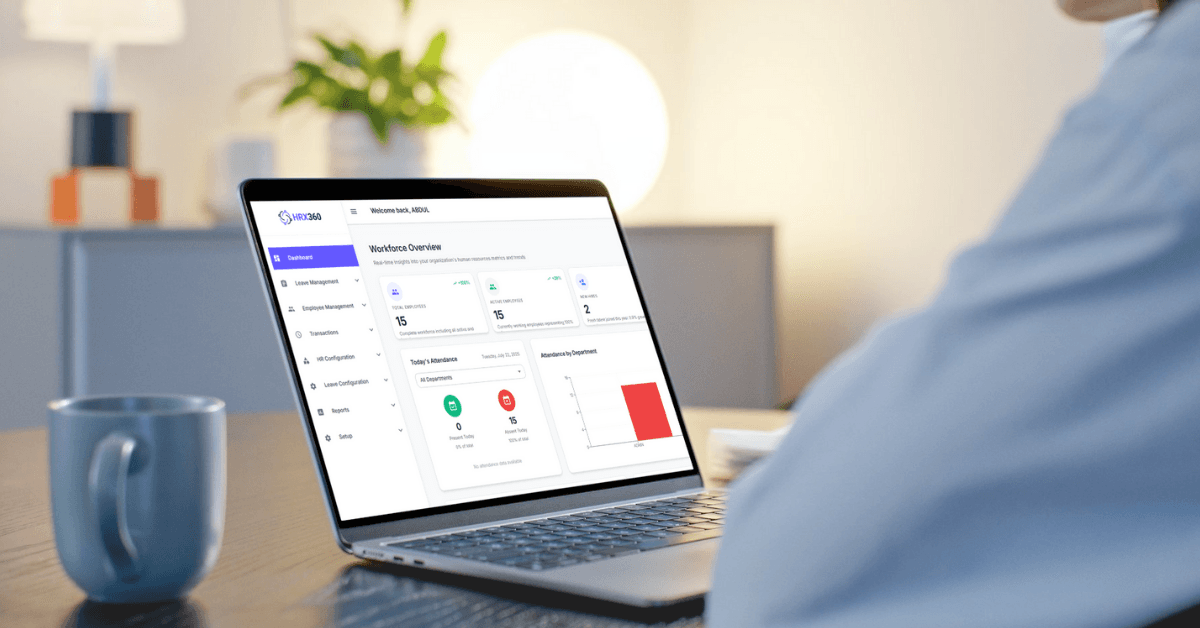
Why HR Workload Is a Growing Problem for UAE SMEs
In many UAE small businesses, HR teams are expected to manage hiring, attendance, leave tracking, payroll preparation, and employee queries—often with limited resources.
Common challenges include:
- • Repeated employee questions about leave balances
- • Manual attendance verification from Excel or emails
- • Delays caused by approval follow-ups
- • Data errors that surface during payroll processing
Without automation, these routine tasks consume valuable HR time and increase operational risk.
What an ESS Portal Changes for HR Teams
An Employee Self-Service (ESS) portal shifts routine HR interactions from emails and spreadsheets to a single, structured system.
Instead of responding to individual requests, HR teams oversee workflows from a central dashboard—saving time and improving accuracy.
To understand the basics of ESS portals and how they work within HRX360, you can start with this overview: HRX360 ESS Portal
5 Ways ESS Portals Reduce HR Workload
1. Fewer Manual Leave Requests
Employees apply for leave directly through the ESS portal. Requests follow predefined approval workflows, removing the need for HR to:
Manually check balances
Track approval emails
Update Excel sheets
Related: Leave Management Software UAE
2. Reduced Attendance Queries
When employees can view their attendance and working hours themselves, HR no longer needs to respond to daily attendance clarification requests.
Attendance data is visible, structured, and audit-ready.
Related: Time & Attendance Software UAE
3. Centralised Communication Instead of Emails
ESS portals provide a single place for HR announcements, policy updates, and reminders—reducing scattered communication across emails and messaging apps.
This improves clarity while reducing repeated explanations.
4. Less Data Re-Entry and Fewer Errors
Manual HR processes often require entering the same data multiple times.
With ESS portals:
Leave and attendance data sync automatically
HR teams avoid duplicate data entry
Payroll preparation becomes smoother
Fewer manual steps mean fewer errors and less rework.
5. Better Control Without Increasing HR Headcount
As teams grow, HR workload increases disproportionately.
ESS portals allow SMEs to scale operations without immediately expanding HR teams—making automation a cost-effective decision.
ESS vs Manual HR Processes (Quick Comparison)
| Area | Manual Process | ESS Portal |
|---|---|---|
| Leave requests | Emails & Excel | Automated workflow |
| Attendance visibility | HR-only | Employee self-view |
| Follow-ups | Manual chasing | System notifications |
| Data accuracy | Error-prone | Centralised & consistent |
| HR effort | High | Reduced |
Is an ESS Portal Worth It for Small UAE Businesses?
For UAE SMEs, the return on investment from ESS portals comes from:
Time saved on repetitive tasks
Automate routine HR requests
Reduced HR errors
Eliminate manual data entry mistakes
Faster approvals
Streamlined workflow processes
Better employee experience
Self-service access anytime
Even small teams see measurable efficiency improvements within weeks of implementation.
How HRX360 Helps UAE SMEs Simplify HR Workload
HRX360's Employee Self-Service portal enables UAE businesses to:
Automate leave requests and approvals
Give employees visibility into attendance records
Reduce HR follow-ups and manual tracking
Maintain structured HR data for compliance and payroll preparation
Explore the full HRX360 platform here: HRX360 Features
See the Impact in a Live Demo
If your HR team is spending too much time on routine requests, an ESS portal can make an immediate difference.