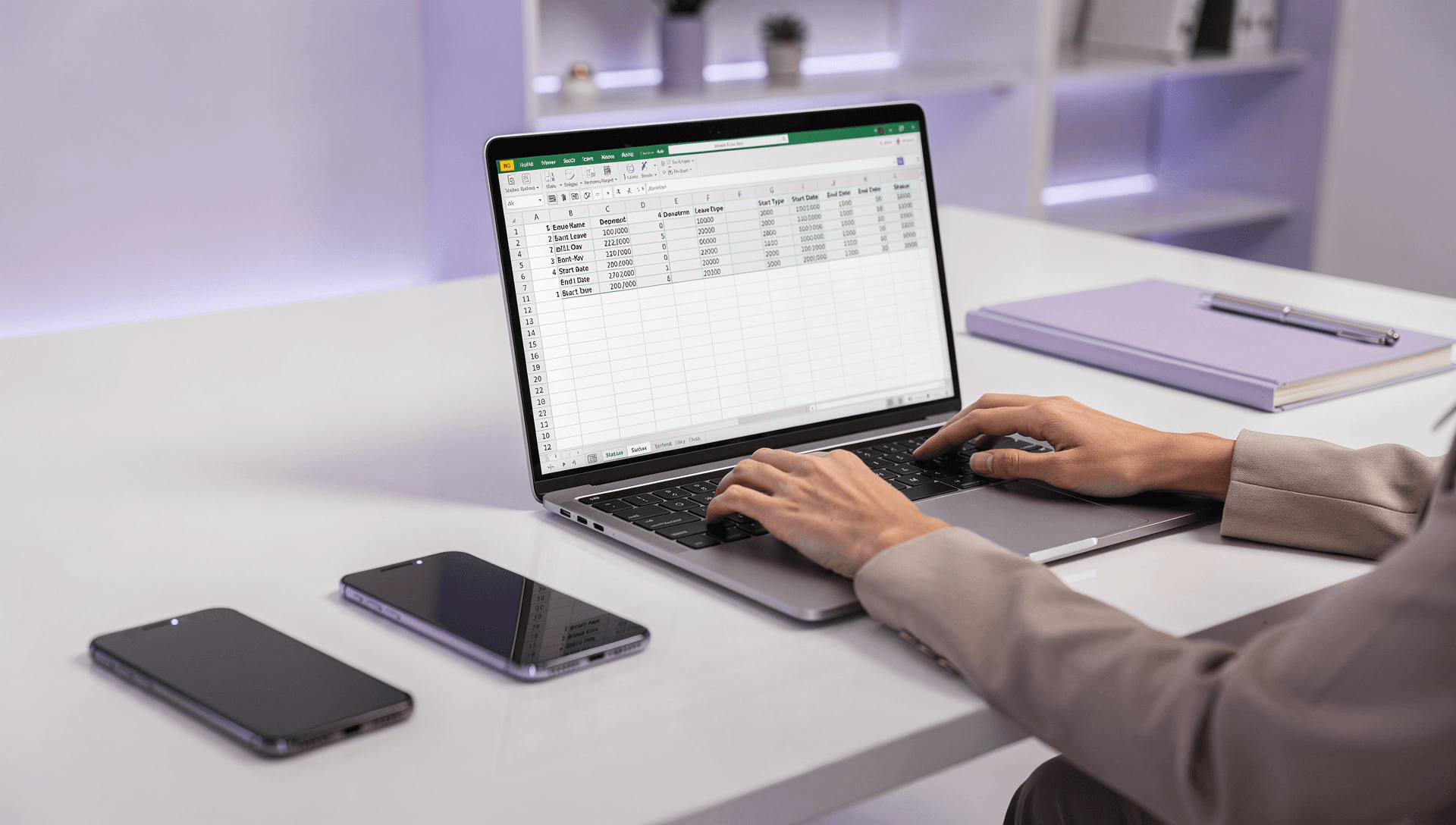
Why Many UAE SMEs Still Use Excel for Leave Tracking
Excel is familiar, inexpensive, and easy to start with. For many UAE small businesses, it feels like the quickest way to manage employee leave.
But as teams grow beyond a handful of employees, Excel-based leave tracking starts creating hidden costs — in time, accuracy, and employee trust.
The Real Cost of Managing Leave in Excel
At first glance, Excel appears free. In reality, it carries ongoing operational costs:
Time spent updating leave balances manually
HR follow-ups to confirm approvals
Errors caused by duplicate or outdated files
Time lost resolving leave disputes
These costs increase every month as the team grows.
Common Leave Tracking Errors in Excel
UAE SMEs using Excel often face:
Incorrect leave balances
Overlapping leave approvals
Missed approval emails
Confusion over which sheet is the latest version
Payroll corrections due to leave mismatches
Most of these errors are not HR mistakes — they are system limitations.
How Leave Management Software Solves These Problems
A Leave Management Software replaces manual tracking with structured workflows.
Instead of emails and spreadsheets:
Employees apply for leave through the ESS portal
Approvals follow defined workflows
Leave balances update automatically
HR sees all records in one place
This reduces both errors and administrative effort.
Excel vs Leave Management Software (Side-by-Side Comparison)
| Area | Excel | Leave Management Software |
|---|---|---|
| Setup | Quick | Simple guided setup |
| Leave balance accuracy | Manual | Automatic |
| Approval tracking | Emails / WhatsApp | Built-in workflows |
| Version control | Error-prone | Centralised system |
| HR effort | High | Significantly reduced |
| Audit readiness | Weak | Strong |
Time Savings for HR Teams
With leave management software:
Less Manual Work
HR spends less time updating spreadsheets
Fewer Emails
Fewer clarification emails from employees
Faster Approvals
Managers approve faster with clear requests
Over a year, these small savings add up to significant productivity gains.
When Should UAE SMEs Move Away from Excel?
Excel may work temporarily if:
- ✓ The team is very small
- ✓ Leave rules are simple
- ✓ There is minimal growth planned
However, most UAE SMEs should consider switching when:
Leave disputes start increasing
HR spends too much time on tracking
Payroll corrections become common
Team size grows beyond 10–15 employees
Does Leave Management Software Make Sense Before Payroll Automation?
Yes.
Many UAE businesses implement leave management before full payroll automation.
Accurate leave data makes payroll implementation smoother later and reduces errors during transition.
How HRX360 Helps UAE SMEs Move Beyond Excel
HRX360's Leave Management module helps UAE SMEs:
Replace Excel-based tracking
Move to structured digital workflows
Automate leave requests
Streamlined approval workflows
Maintain accurate balances
Real-time leave balance updates
Reduce HR workload
Less manual work and fewer errors
Explore the Leave Management module: https://hrx360.com/leave-management-software-uae
Start Now or Schedule a Live Demo to see how HRX360 simplifies leave management.
Book a demo: https://hrx360.com/schedule-demo
FAQ
1. Is Excel free for leave tracking?
Excel appears free, but carries hidden costs in time, errors, and HR workload that increase as teams grow.
2. When should UAE SMEs switch from Excel?
Consider switching when leave disputes increase, HR spends too much time tracking, payroll corrections become common, or team size grows beyond 10-15 employees.
3. Can leave management software integrate with payroll?
Yes. Accurate leave data from leave management systems makes payroll implementation smoother and reduces errors during transition.
4. Does leave management software replace HR staff?
No. It reduces administrative workload so HR teams can focus on strategic tasks rather than manual tracking.
Ready to Move Beyond Excel?
See how HRX360 helps UAE SMEs automate leave tracking, reduce errors, and save HR time.